LPG Supply Issues in India: Can PNG Solve the Problem?

What is PNG and How Does It Work?
The question of LPG supply issues in India has become a burning one, as India is importing about 80-85 percent of their LPG by way of weak shipping routes. Almost 90 percent of these imports are shipped via the Strait of Hormuz, and this means that any crisis will have a direct effect on your supply of LPG cooking gas. The government has now ordered the households to convert to piped natural gas (PNG) where supplies are available and the LPG supply will be stopped in the areas that have access to gas pipeline connection. But is it possible that PNG is going to substitute your LPG cylinder?
This blog post focuses on the contrast between LPG and PNG, the modern supply crisis, and the reason why the installation of gas pipes may not be as much of a solution as you would imagine.
Understanding the LPG supply issues in India
In late February 2026, the Strait of Hormuz was closed successfully by joint attacks by the U.S. and Israel when the conflict in West Asia had intensified. It is a very small waterway that generally transports almost a third of the LPG in the world and its shutdown affected the energy security of India. Approximately 60% of the LPG demand of your country is imported, and of this amount, the imports are transited through this strategic choke point of approximately 90%.
Local refineries only satisfy half of your LPG demands. India is a large producer of LPG that consumes about 2,700 thousand metric tons per month with the domestic production only at 1,036 thousand metric tons. This weakness puts the supply chain at the risk of being a victim of geopolitical pressure on shipping routes.
On the 8th of March 2026, the government used the Essential Commodities Act as a counter to the crisis. Refineries were instructed to optimize the production of LPG by diverting propane and butane streams, which led to the production of 25 percent more at home. But this whole production is now directed solely to the domestic consumers.
There were harsh cutbacks to commercial users. Hotels and restaurants in places such as Bengaluru have stated that the supply has reduced by 40-50%. Most of the restaurants had small menus or closed down. The government has focused on the basic sectors such as hospitals and schools, and a three-member committee checks the allocations to commercial users.
Cylinders were being sold at a premium of between ₹300 and ₹4,000 over the official price in various regions and this phenomenon became known as black marketing.
What is PNG and How It Differs from LPG?
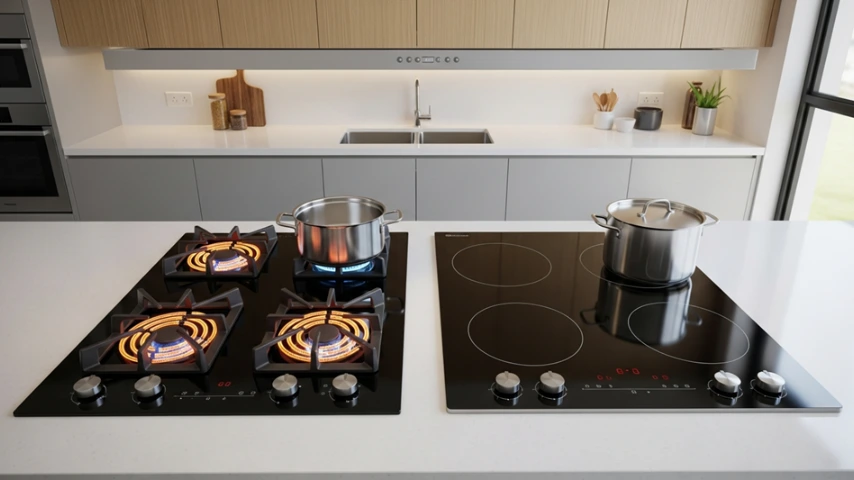
PNG is an abbreviation of Piped Natural Gas. It is primarily methane and it finds its way to homes via underground pipes. On the contrary, the gas in the cylinders is LPG. It is a combination of propane and butane that are pressurized.
The supply system is different. PNG is just like water and it flows continuously. You pay on meters on a monthly basis. LPG should be booked and delivered when the cylinder is empty.
Storage is another thing. LPG remains in a cylinder as a liquid and you have to have room at home. PNG is in the form of gas and therefore it does not require any storage at all.
Feature | PNG (Piped Natural Gas) | LPG (Liquefied Petroleum Gas) |
Composition | Methane | Propane + Butane |
Supply Method | Pipeline | Cylinder |
Storage | No storage needed | Stored in cylinder |
Safety | Lighter than air | Heavier than air |
Cost | Meter-based billing | Fixed cylinder price |
As a matter of fact, PNG is lighter than air and propagates rapidly in the event of a leak in safety. LPG is more dense and is concentrated at the ground. PNG is less expensive and less polluting to cook.
Why PNG Cannot Solve India's LPG Supply Issues?
PNG expansion is structurally challenged and will not be able to substitute your LPG cylinder in the near future. In December 2025, India had a domestic PNG connection of 1.62 crore and it is to be increased to 12.6 crore by 2034. However, fewer than 90 lakh new connections were added in the past five years. With this rate, the 2034 target is still unreachable.
Access is restricted by geographic concentration. Maharashtra contains 27 percent of PNG relationships, Gujarat 26 percent, Uttar Pradesh 13 percent and Delhi NCR 12 percent. Parts of central, southern and northeastern India have no pipeline infrastructure. Your country possesses about 25,000 km of pipeline network, and 10,500km of pipeline network is in the process of development. In comparison, LPG connections increased by a factor of 3.25 times, between 14.52 crore and 32.83 crore since April 2014 with more than 90 percent of new distributors based in rural locations.
Government delays the construction of gas pipeline installation. Slow process in city clearances, right of way acceptances, and excessive repair fees hamper the growth of networks. Connection fees are between 6,000 and 9,000 per household which puts economically disadvantaged families at a disadvantage.
Infrastructure issues are complicated by supply problems. More than half of natural gas imports into India are imported and the system is affected by global price changes. Moreover, the increase of PNG requests might shift gas to other fertilizer production (30%), power generation (13%), and industries (35%). Long-term storage facilities are not available in the country and the supply model is just in time, which is easily affected by problems.

To Sum up:
To sum up, the problem of LPG Supply Issues in India needs a more balanced and pragmatic solution. Although Piped Natural Gas (PNG) is convenient and more reliable in supply, it is subject to expansion in infrastructure and appropriate maintenance, which determines its success. With the increasing gas pipeline networks, timely natural gas pipeline repair is also an important factor to maintain safety and efficiency. PNG will be useful to urban households, although it cannot entirely substitute LPG in all regions. The knowledge of the difference between LPG and PNG enables the consumers to make wise energy decisions. A properly installed and well maintained domestic gas pipeline connection offers a more reliable and efficient long term answer to the daily energy requirements of people planning to switch.
As LPG Supply Issues in India have recently risen, a change to PNG may be a viable option. However, Say No to poor gas pipeline installation; leave the work to Rightcliq's skilled staff to install your gas pipeline safely and efficiently, without fail.