Washing machine not draining? 7 reasons and quick fixes

Quick Maintenance Tips to Prevent Drainage Issues
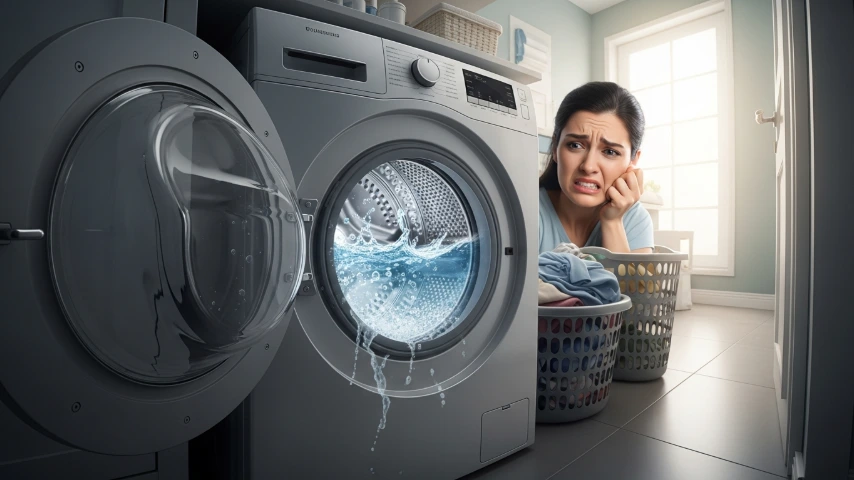
If your washing machine is not draining, it may appear as complex but may be quite simple. The most common reasons are often a blockage, slight installation problem or just some cleaning. It is fortunate that the initial solutions are straightforward. A little preventative maintenance can save precious time, prevent spills and eliminate the need for a repair service technician. But, if your machine is not draining water, you can turn to a washing machine repair service to diagnose the root cause. Take some basic steps, then the list of the seven most common causes of poor drainage.
Start with the safest quick checks before taking anything apart
Turn off the washer. Then be ready with towels, or a wide shallow pan container or tray as water retained in the washer will come out if you take out a filter or hose.
Make sure it's on drain or spin when disassembling it. And see if load was paused, drum is off-balance or lather is preventing drainage, which may also affect the spin speed. These steps are tedious, but they will save time compared to opening the washer.
Make sure the cycle and load are not the real problem
Too much clothes can unbalance the tub. This can make a lot of washers refuse to spin and standing water can collect. Towels, blankets and jeans are prime offenders.So open the washer, make sure clothes are spread out, and take out a couple of heavy things (if there are any). Then drain or spin your washer again. If it drains properly that might be all you need to do to find that your washing machine is actually working fine.
That's why unbalanced loads are usually at the top of repair guides, such as this washer drain and spin help guide. They can appear as a major drain problem.
Use the right amount of detergent
Excess soap makes lots of suds, and those suds can trick the machine, so it washes improperly, or slows down the failed drain pump that brings water in. Front loaders are super-sensitive, so they require HE detergent and less amounts - too much soap can also block parts.
If you have too many suds and water in the basin, run an extra rinse and spin cycle (without adding detergent). Then next time put less to prevent using too much soap. A faulty drain pump can cause water to remain in the basin. Clean clothes don't need more soap, just a few pinches is enough.
Common reasons a washing machine is not draining
Washing machines not draining is a common problem that is caused by different reasons such as clog filters, kinked drain with hose, or broken washer pump. Any big repair of the hardware of the washing machine such as removing debris in the drain pump filter, aligning the hoses and re-setting the machine will surely turn out better outcomes.
Here are 7 reasons why your washing machine won't drain (with fixes):
1. Drain Filter Blocked (Most Common)
Reason: The filter is blocked by lint, coins, hair and fabric which is accessed through a small door on the bottom left side.
Solution: remove the panel - put down a towel - unscrew the filter - clean it out
2. Crimped/Clogged Hose
Reason: The drain hose thanks to which the water will flow out is kinked, flattened against the wall, or clogged with dirt.
Solution: Straighten the hose behind the machine Unhook hose and check for blockage, clean with water.
3. Bad or Clogged Drain Pump
Reason: The impeller gets blocked by debris though the pump filter or it's burnt out.
Solution: The drain pump is humming during the drain cycle. Remove the pump filter and try to rotate the impeller to clean the wastage. If this is not the case, the pump can be replaced.
4. Excessive Detergent Suds
Cause: Too much detergent can be the matter of "suds-lock, " a situation when an unusually high amount of foam interferes with the pump's operation.
Solution: Wait half an hour after turning off the unit, allowing bubbles to fade naturally. Next time, add a smaller amount of cleaning soap when washing clothes.
5. Drain Pipe Clogged
Reason: There is a back-up in the drain pipe or laundry sink.
Solution: Disconnect the drain pipe from the standpipe and check for a bath. Use a snake or cleaner if necessary.
6. Faulty Lid Switch or Door Lock
Reason: The washer thinks the door is not shut; it stops itself from beginning to drain or spin. Safety comes first - so if sensors detect even a hint of an opening, nothing moves.
Solution: Check that the door or lid closes fully. When the sensor fails, a new one takes its place. Shut tight - if it still acts up, check for a blocked drain hose or swap out the part.
7. Broken or Unbalanced Drive Belt
Reason: When the drum jams, spinning stops - this halts the drain process, particularly in models where belts drive the system. Motionless drums block progress; power reaches the motor but goes nowhere. Without movement here, the next phase waits indefinitely, trapped by physical resistance inside.
Solution: See if you can freely spin the drum. If not, the drive belt could be snapped or off.
If you are still struggling to diagnose that the washing machine not draining, and can't find the exact solution, check out this handy image below. This shows the common problems why your washing machine is not draining and how to fix this:

Preventing Washing Machine Drainage Issues in the Future
After fixing the initial problems, your actual target should be to stop the annoying scenario when your washing machine not draining problem keeps happening over and over. Basic maintenance will help a lot. A time to time checking of the hoses, proper clean filters, and say no to overload your washing machine to make each washing cycle effortless and without any unforeseen breakdowns.
You can prevent your investment and make sure that your laundry process does not fail once again, which is why you may avoid facing real-life examples, such as the malfunction of a control board. In case of a home warranty for appliances, it may be necessary to maintain your warranty regularly.
Regular Maintenance and Cleaning Tips
This is easy to maintain which is good. Common problems such as a washing machine not draining can be prevented by just following simple cleaning procedures that ensure that the drain hose, water pump and outlet hose are maintained free of clogs and strain. Incorporate these little things into your daily routine and you will be able to identify even minor malfunctions at an early stage before they escalate into more serious and expensive issues of the rest of the appliance. Check the bottom filter as well and clean. All it requires is a few minutes in a month and also has the possibility of correcting noisy machine problems by keeping the parts running well.
The following are some important preventive care tips:
Wash the pump filter at least once or, at most, thrice a month to get rid of the lint and debris, and make sure that the emergency drain tube is clear too.
Before washing, put coins, keys and other small items in the check pockets.
The right amount of HE detergent must be used to avoid building up of suds.
Cleanse the drum and hoses once a month with hot water.
When the repair is easy, and the time to call a professional
Basic checkups, such as load balance, hose kinking, detergent refills, and pump filter cleaning are safe to handle. If deeper clogs occur, using a plumber’s snake tool can be effective. The jobs are low risk when the washing machine not draining and you do them at a slow pace.
Smells like burning, loud grinding, continue to receive the same error code, or water level is coming back, call a washing machine repair technician. This is also true of a malfunctioning lid switch, a replacement of pumps, fixing of wiring, or an indication of a plumber backup. Even in a lot of instances, a single service call would be much cheaper than addressing the entire washer.
Conclusion:
A washing machine not draining is something that can be annoying, but it becomes a much easier challenge to solve when being aware of the most common causes. It can be caused by as simple things as a blocked drain hose, washer over loading or slight plumbing problems. It makes it easier and cheaper to check out what is not right in order to fix it. These problems can be prevented with the help of time to time cleaning and simple care to ensure that they do not recur. Their early detection and on time diagnosis will help in preventing huge damage. An efficient and well-maintained washer will serve you for many years as a better laundry experience. If the problem still says the same saga, you can say hello to a reliable washing machine repair services expert or some home appliances repair services to provide you with professional checking and useful advice so that you will be able to make sure that your unit is working in a proper and constant way.
Besides taking all the required measures, when a washing machine is not draining, make an appointment with a trusted washer servicing company that offers a lasting solution to your washer along with a long period of reliability.
FAQs:
1. Why does my washing machine not drain water?
The failure mainly occurs because of blockage of a drain filter, kinking hose, or detergent deposition, which prevents passage of water.
2. What do I do to get an unresponsive washing machine to drain at home?
Begin by cleaning the drain filter and making sure you check the hose, is there nothing blocking it and do a spin cycle using a full load.
3. Will excessive detergent prevent my washer from draining?
Yes, too much detergent forms suds, which gets in the path of the drain pump, slows down or completely blocks up the drain.
4. When do I hire a technician to fix a problem with drainage?
When you observe any burning odors, loud noises, and frequent failures to empty the drain, there is probably a pump or some internal issue to fix by specialists.